Category Archives: Adventure Travel

Africa: Adventure’s Last Frontier

Jeanie at Dead Vlei, Namibia

I’m very lucky – I’ve travelled all over the world for both my job and for pleasure, filming, photographing and writing about different lands and cultures, fascinated by them all. But nowhere draws me back quite like Africa.

From the mountains of Morocco to the wildernesses of Namibia, for me Africa is the last continent where true adventures are still to be had. And its pull keeps taking me back there – the more I explore it, the more I want to find.

Growing up, I read avidly about the exploits of Captain Cook, Columbus, Darwin and Magellan – great explorers who, even before detailed maps were drawn, were fuelled by a desire to seek out new places and peoples and put themselves in the path of incredible new experiences.

Centuries later, the world is a much smaller place and it’s hard to find parts of the globe where I might even come close to experiencing what those explorers of old felt. But Africa delivers every time – from the eery moonscapes of the Namib Desert and Mozambique’s wild northern coast to the vast, undulating sand dunes of the Sahara, these are the places that inspire and captivate me. Whether bumping along precarious remote canyons by Land Rover or trekking on foot across endless tracts of open African desert, these are the places where my spirit of adventure soars.

It’s me versus the terrain – suddenly I’m the star of my very own Woman Vs Wild! – and I’m in awe of, indeed in love with, these endless landscapes far from civilisation. I never feel more alive than when I’m in Africa.

And perhaps that’s the point. As a city-dweller (a necessary evil of my work, alas), I perpetually long for escape from the trappings and complications of modern life – the technology, the pressures and stresses, the constant stream of information from every angle. Those African landscapes take me back to basics and remind me that, fundamentally, we are all just small human beings on a vast and beautiful planet.

So here I am planning my next escape, my next adventure… Africa awaits!

Where in the world do you go to feel the spirit of adventure? Post a comment just below!

Volunteering: Worth The Money?

Trekking for UNICEF – a great fundraising experience!

Since doing my Sahara trek for UNICEF last November, I’ve been keen to find other ways of combining adventurous travel with “giving something back”. So I’ve been looking into volunteering, perhaps in Africa, Mongolia or South America. But after extensive research and asking-around, I’ve been decidedly discouraged by my findings.

Googling the word “volunteer” brings up swathes of companies worldwide who will organise your volunteering experience, whether it’s working with orphaned kids in Malawi, teaching English to Tongan students, helping out on an archaeological dig in Peru, or tracking endangered dolphins off Mombasa.

The experiences all look amazing – but I was staggered by some of the costs quoted. In many cases, a couple of weeks volunteering would cost more than a decent holiday in a nice hotel with all the trimmings. And for someone like me, wanting to dedicate perhaps three or six months to a worthwhile project, the accumulative costs become, quite simply, prohibitive.

I totally understand these companies have “administrative costs” they must cover. But when I’m paying for my own flight, living in very basic accommodation, and giving a huge chunk of my time (and skills) for free, I’m struggling to see why I have to pay someone such exorbitant fees for that “privilege”. Sadly, volunteering seems to be largely the domain of those who can afford it, rather than those with a genuine desire to give something back. And when it’s going to cost me an arm and a leg financially, it does somehow deflate the “goodwill bubble”.

So, somewhat disillusioned, I’ve put my volunteering aspirations to one side for now. I’m going to look for a way of organising my own – affordable – “giving back” experience…

Got a view on this? I’d love to hear it, so do post a comment below!

101 Amazing Adventures: Charity Trekking

Jeanie (third from left) and Russ (far right) celebrate the end of their Morocco adventure with fellow trekkers

Back in November, Big Earth producer Russ Malkin and I were part of an amazing adventure, trekking across the Sahara Desert near the Morocco/Algeria border. For eight days, we and about thirty other hardy souls crossed undulating orange sand dunes, parched plains and steep rocky crags on foot, camping by night in Bedouin tents under the Saharan stars.

Along the way, I filmed and photographed the adventure and some of my photos from the expedition feature in Russ’s new book, just released, Big Earth: 101 Amazing Adventures (it’s Adventure 91).

Apart from having a brilliant adventure, the purpose of the trek was to raise money for a good cause – in this case UNICEF.

This kind of trip, combining fundraising with adventure travel, is becoming increasingly popular – and I can honestly say it was one of the most fulfilling experiences I’ve ever had. It ticked all the boxes of a real adventure – we were travelling well off the beaten track and really roughing it! And undertaking such a challenge for charity meant that when it got hard (and believe me, it was no walk in the park!) we were all compelled to keep going.

So grab a copy of 101 Amazing Adventures to be inspired for your own adventure: http://www.amazon.co.uk/Big-Earth-101-Amazing-Adventures/dp/0593066111.

And visit the UNICEF website http://www.unicef.org.uk/Fundraise/Get-active/Trekking/Namibia-trek/ to sign up for their next Africa trek in September (hurry, though, places are limited!). I promise you, it’s a life-changing experience that will stay with you forever.

Adventure: A Man’s World?

Trekking the Sahara Desert, 2010

This week, I’ve been developing a new adventure series for television. While doing some research for the programme, I came across some really eye-opening attitudes about women and the adventure sphere.

There seemed to be a general feeling amongst the men I spoke to that the only women who tackle hardcore adventures are “big butch lesbian types”, and that women for the most part aren’t cut out for expeditions or challenges requiring supreme mental and physical strength. And, argued these same guys, men don’t want to watch TV programmes about butch lesbian women’s adventures – but if they were young, blonde and fit-looking….

As you might imagine, I found these comments very…provocative. After doing a straw-poll amongst some female colleagues (who retorted that men should try childbirth before consigning women to the adventure scrapheap!), I realised there’s still a widely-held belief that adventure is the domain of men – and therefore that adventure programmes on TV appeal largely to men, who want to watch other men having amazing adventures.

Sadly, I’ve noticed this perception stretches into the TV community – for example, Nat Geo Adventure (one of my favourite TV channels) http://natgeotv.com.au/tv/ regularly runs shows featuring male adventurers, but there are comparatively few documenting female stories. Don’t get me wrong, I love watching shows like Man vs Wild, Long Way Round, Danger Men, Graham’s World...but where are the women??

Why, in the 21st century – supposedly an era of gender equality – is there still this perception that any “serious” adventure is only worth talking about if men are at the helm? And why are men so disinterested in female adventures?

I’d genuinely love to know the answer, so please do post your comments below

Doing The Dakar

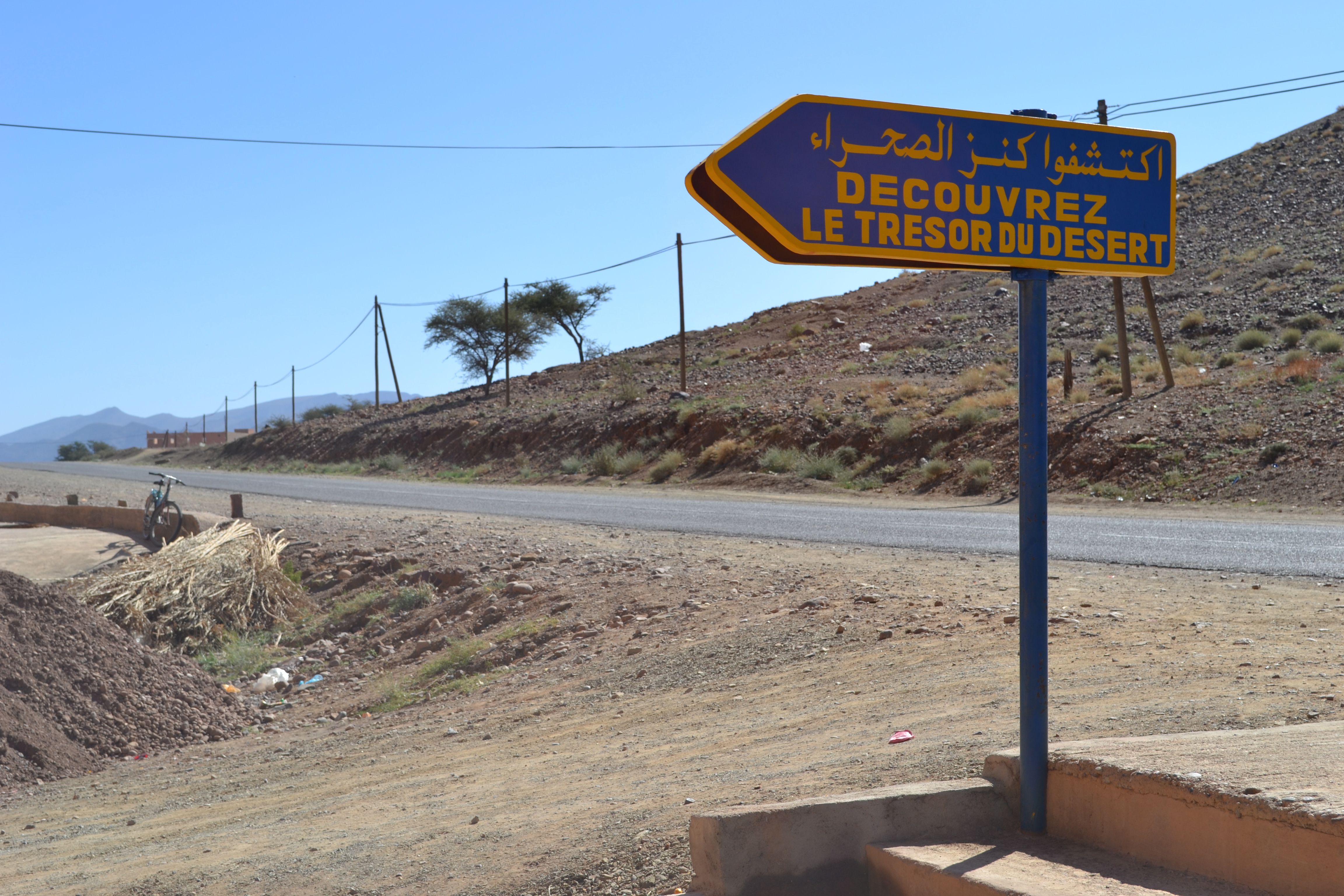
Desert signpost, Morocco

My whole life, I’ve wanted to take part in a motoring rally across Africa. From an early age, I remember seeing footage of the legendary Dakar Rally and marvelling at the sheer adventure and excitement of it.

The Dakar today is an incredible feat of endurance for bikers and motorists from all over the world – you only have to watch Charley Boorman’s excellent Race To Dakar documentary series to see that. But the Dakar is phenomenally expensive to take part in and the preparation for it takes months, if not years.

While I’m pretty sure I’ll never do the REAL Dakar (though I never say never…!), I’m still intent on doing something like it – and soon! Right now, I’m looking at The Dakar Challenge: http://www.dakarchallenge.co.uk/challenge/timbuktu+challenge/ which is billed as the “alternative Dakar” for those who want a tough challenge but also to have adventures along the way. And there are heaps of other Africa-based motoring events that have caught my eye. Which one to choose??

I’ll need to find a co-driver: a like-minded person (male or female) who buzzes at the thought of a challenging motoring adventure across the wilds of Africa. That’s assuming it’s a car rally, of course – now that I’m a fully-fledged biker, I can’t help wondering now if two wheels is the way to go…

So, watch this space. Life’s too short to put off dreams: and I fully intend to fulfill this one as soon as I can.

Taken part in a rally across Africa? Can you recommend a good one? I’d love to hear about it – just post a comment below!

Jeanie’s previous adventures on four wheels and two:

https://jeaniedavison.com/2011/02/11/lesotho-4wd-adventure/

https://jeaniedavison.com/2010/06/23/australian-desert-adventure/

https://jeaniedavison.com/motorcycling/

Shooting the Sahara

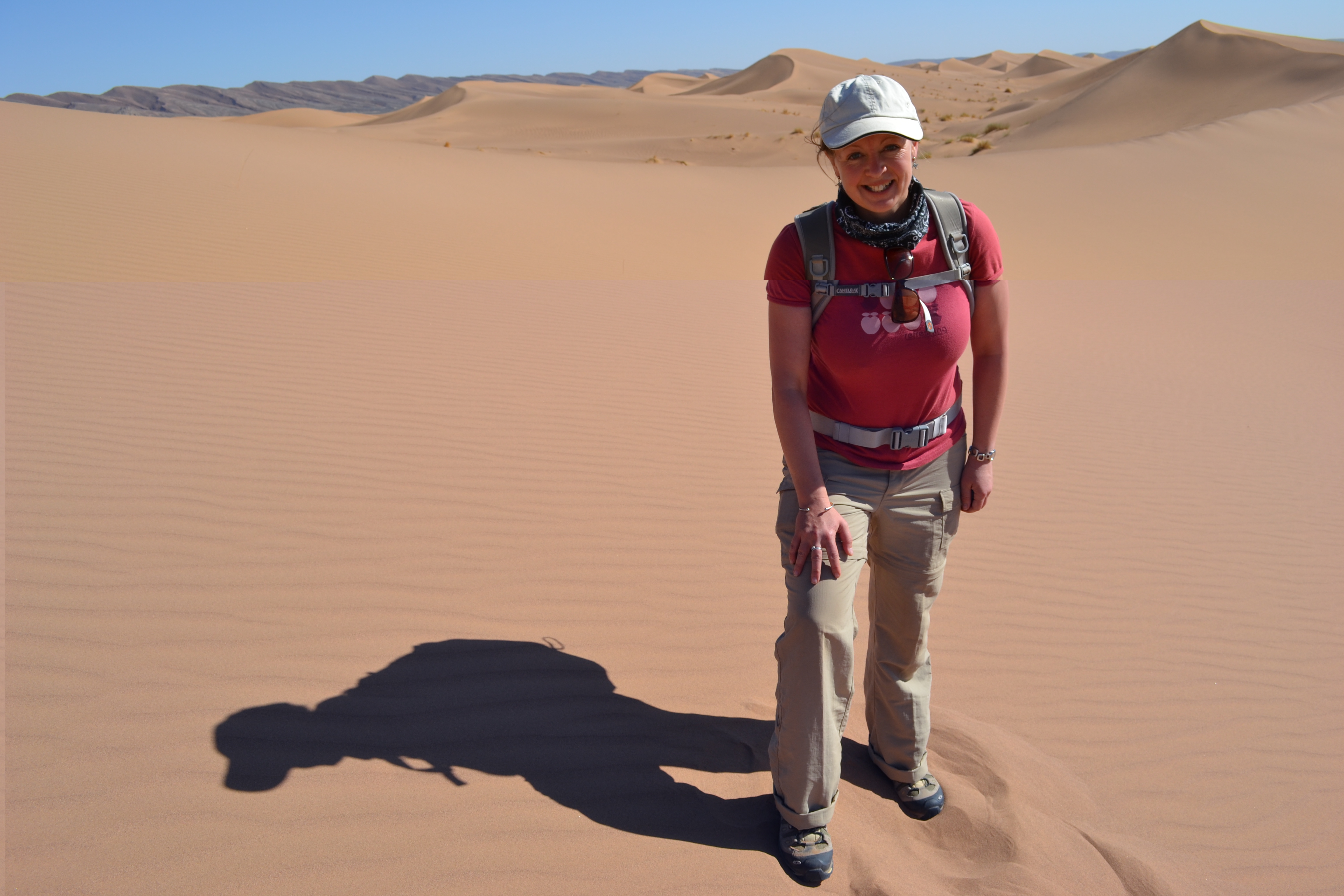
Filming on the side of a Saharan sand dune

Since Russ Malkin and I returned from our UNICEF Sahara adventure, many people have asked about the technology we used to capture and upload our blogs, photos and video footage in the Moroccan desert. So here’s a run-down…
Deciding what technology would serve us best in such a far-flung location was key in planning the trip. As well as the obvious challenges of being in such a remote place (no phone reception or internet access!), we also had to consider the nature of the expedition itself – ie trekking on foot across hot, sandy desert with no support vehicles.
The Sony HVR-A1 was my video camera of choice – compact and lightweight, it’s ideal for situations where extreme mobility is needed, but doesn’t compromise on image quality. I took a few additional accessories – small tripod, wide angle lens, fluffy microphone to combat the noise of the Saharan winds, spare batteries, and of course plenty of DV tapes. This set-up fitted neatly into a large back-pack – and we hired a trusty Moroccan porter named Mohammed to carry it on the trek, so that I’d have it immediately to hand whenever required.

Filming on a rocky ridge as my trusty Moroccan porter looks on

In such an iconic and photogenic location as the Sahara, a good stills camera was an absolute must. I shot images of the location and the trekking group using my new Nikon D3100 with a couple of interchangeable lenses – 18-55mm and 55-200mm. At 450g, it’s Nikon’s lightest SLR camera and has a great range of features including full HD. I used lens filters to combat the glare of the desert sun (and protect the lenses from sand and scratches), and the video camera tripod doubled up for use with the Nikon too.
The stills and footage I shot with the A1 and the D3100 were supplemented with material from Russ’s iPhone 4. The image quality of the new iPhone is really impressive, and Russ was able to capture short videos and photographs in the heat of the moment that we might otherwise have missed with the more “regular” cameras.

So how did we upload all these images to the UNICEF and Big Earth websites from the middle of the Sahara? Well it all came down to a handy set-up called a BGAN (Broadband Global Area Network) – a remote-area mobile satellite system which, when loaded onto a laptop, can connect you to the internet, no matter where on the planet you are. News media organisations use the BGAN to file reports from war zones, disaster-hit areas, sports events and remote regions.

It was a really satisfying feeling uploading the materials each night from the middle of the desert, knowing that people back home would see them and feel part of our journey as it unfolded. I still marvel that we were able to get internet access in the middle of nowhere!

Got some expedition tech tips you’d like to share? Post a comment below.

Lesotho 4WD Adventure

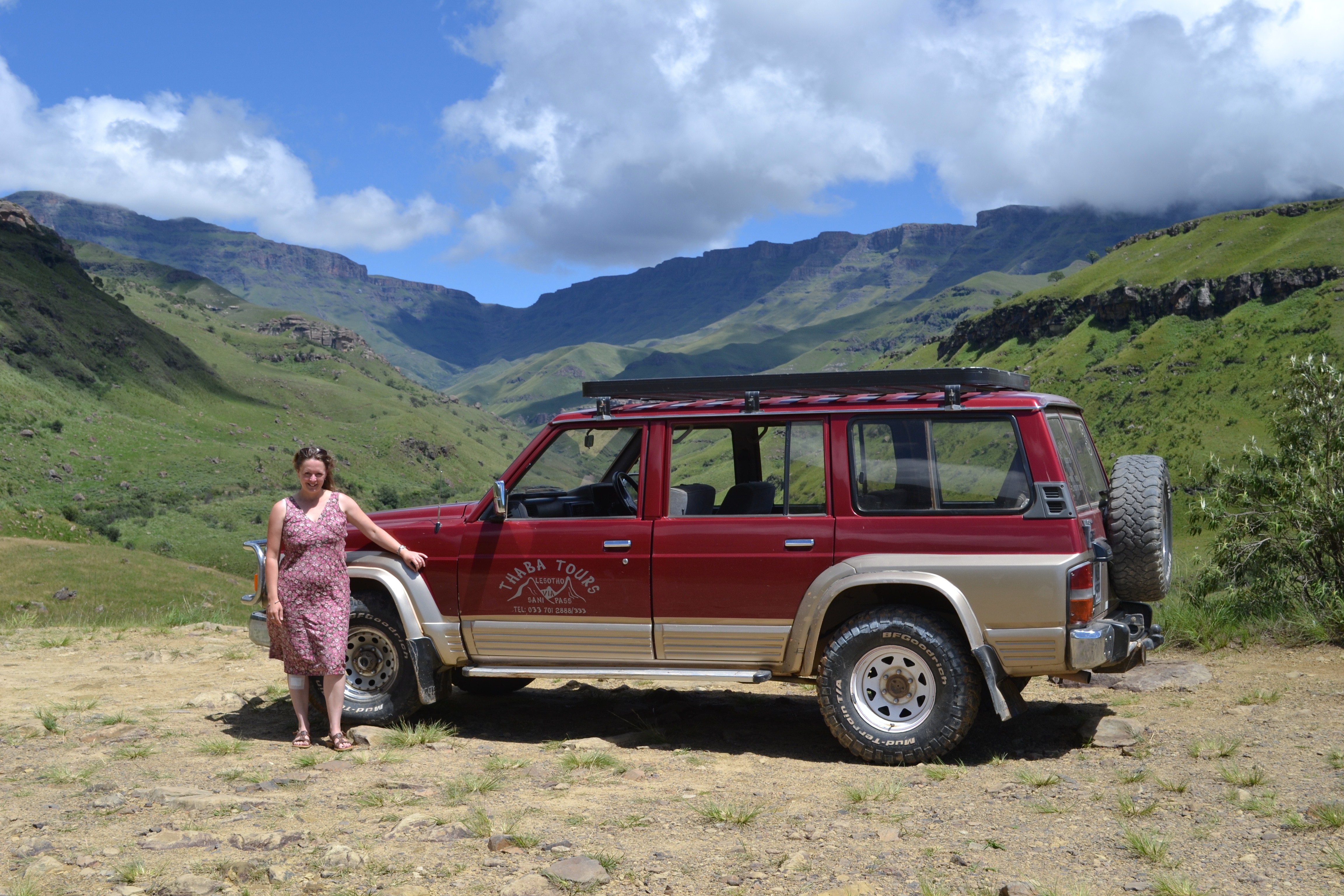
Jeanie and Nissan Patrol, Sani Pass, Lesotho

Well my latest southern Africa adventure didn’t disappoint. As well as re-visiting some of my favourite places in South Africa, I made a new discovery…Lesotho. The “Kingdom in the Sky” certainly lived up to its name – driving through the rugged mountains there, often above 1,000m, I was frequently up in the clouds, quite literally!

The highlight was, inevitably, the incredible Sani Pass. If any of you 4×4 enthusiasts out there haven’t done it, put it on your bucket list right now, it’s incredible! Approaching Lesotho from South Africa’s Drakensberg Mountain region, I headed up the pass in a trusty old Nissan Patrol, through the tiny border post about a third of the way up, and then right up to the village at Sani Top. The road was one of the most precarious I’ve ever driven – entirely gravel and rocks, numerous hairpin bends and some treacherous washouts requiring very careful manoeuvring so as not to slip over the edge into the ravine below! What rewards you at the top (apart from having survived the ascent!) is an incredible view looking across the mountains – oh and the highest pub in Africa, which does a mean toasted cheese and ham sandwich washed down with cold beer. An amazing driving adventure – but not for the faint-hearted!

As I quickly discovered, Lesotho is home to the wonderful Basotho people, many of whom inhabit remote and basic villages, subsisting on what crops they can grow at such high altitude and the wares they make by hand to sell to tourists (including the distinctive conical hats and heavy blankets which are widely worn by locals in the region).

They’re hardy and friendly people, as I discovered when I got my vehicle stuck on a particularly gnarly stretch of road on the way to the Katse Dam. Having got the car jammed somehow over a boulder in what seemed to be a very remote area, local men old and young appeared out of nowhere from the surrounding mountains to help push my car off the rocks and back onto the road. Considering most of them don’t drive cars – they get around on horses for the most part – their understanding of car mechanics was pretty spot on and having assessed my predicament they set about solving it with ingenuity and determination. Wonderful to see. 

I spent some time in a number of Basotho villages, getting to know the local customs and even learning a little of the native Sotho language too. One of the poorest countries in the world, Lesotho proved to me yet again that it’s often the poorest people in the world who are the most generous – they took me under their wing, lavished me with home-cooked food and handmade gifts, and made me feel so welcome that I didn’t want to leave.

I headed back into South Africa with mixed feelings – it would be great if more tourists visited Lesotho, as it’s truly a unique but very poor country and certainly needs the travellers’ dollars; but it’s a secret gem, still off the beaten track in tourist terms, and part of me wants it to stay hidden so that it its wonderful local charm and beautiful landscapes remain as theyare forever. I for one will return, that’s for sure.

To see my Big Earth piece on how to choose a 4WD vehicle for your overseas adventure, click here: http://www.bigearth.co.uk/experts/motoring/overlandingoverseas.html

UNICEF Morocco Trek

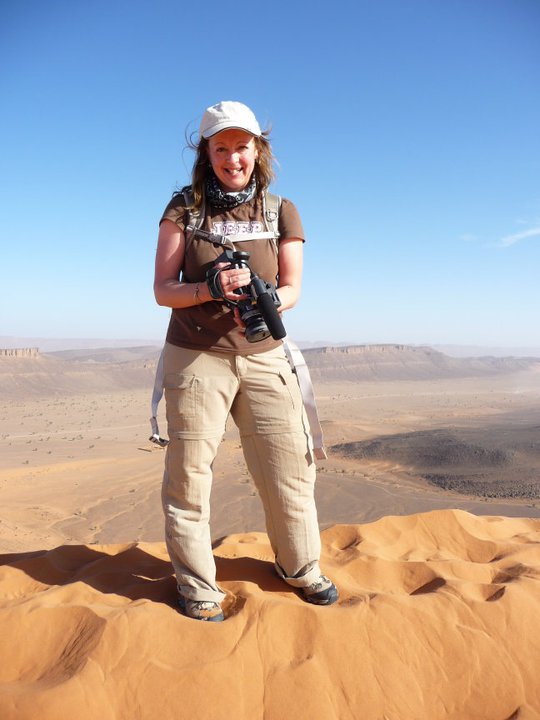
Jeanie with camera in the Moroccan Sahara

Hi, guys! Recently back from my latest amazing adventure, trekking the Sahara Desert on the Morocco-Algeria border, in aid of UNICEF.

As well as undertaking the trek itself – walking 25km a day under the hot desert sun – I was the official documenter of the journey for UNICEF, filming, photographing and blogging as the expedition unfolded. I was there with Big Earth producer Russ Malkin (Long Way Round, Long Way Down, By Any Means) who’s a long-time UNICEF Ambassador – I’m an Adventure Expert (Motoring) for his company and was also doing some filming with Russ for his new book project 101 Amazing Adventures (due out in April 2011).

I raised GBP 2,600 for UNICEF as a result of my efforts – thanks to all you lovely sponsors out there! – and got to see first-hand a couple of the projects the charity contributes to in Morocco – a school and a maternal waiting house. These visits left no doubt in my mind that UNICEF’s work around the world is vital in ensuring the safety and well-being of kids in all countries, and I’ll continue fundraising for the charity in time to come.

To read my blogs from the adventure, have a look at the UNICEF website here: http://blogs.unicef.org.uk/authentic_voices/archive/2010/11/07/trek-for-the-children-of-morocco-anticipating-adventure.aspx

And check out Flickr for a selection of my photos from the expedition: http://www.flickr.com/photos/unicefuk/sets/72157625342060388/

To see a short film about the trip, go here: http://www.youtube.com/watch?v=DxZD1g-72C4

And if you want to trek for UNICEF like I did, there are still places available on their Namibia trek in September: http://www.unicef.org.uk/Fundraise/Get-active/Trekking/Namibia-trek/

Outback Adventure

Crossing the Canning by 4WD

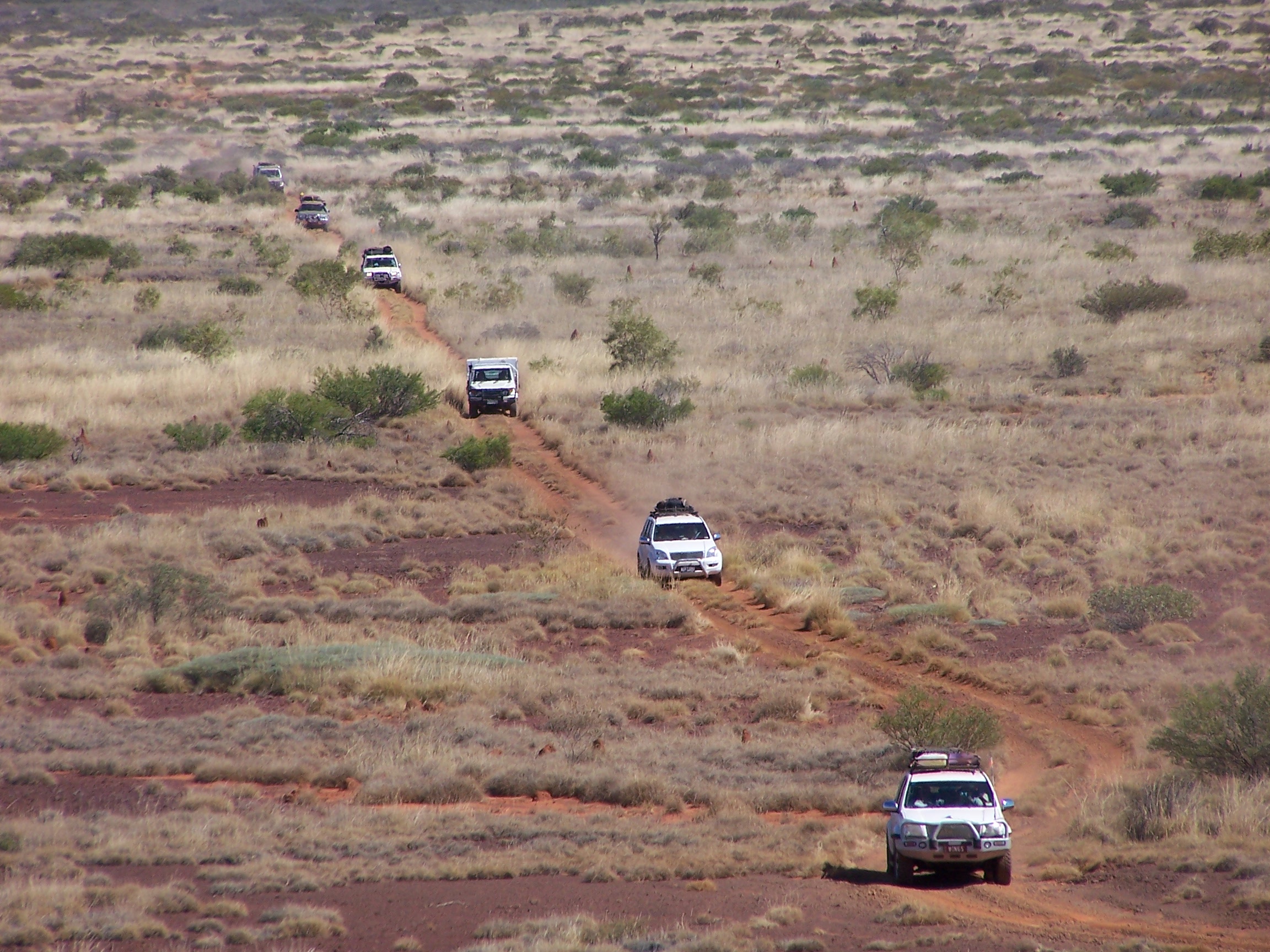
Well they say the Canning Stock Route in Western Australia is one of the toughest 4WD routes you can do – and they’d be right, I reckon! My latest expedition saw me joining a convoy of eight 4x4s heading across four deserts – the Gibson, Little Sandy, Great Sandy, and Tanami – along 2,000kms of some of the remotest terrain in the world.

My trusty co-driver Greg and I were in an old aquamarine Holden Rodeo – a utility vehicle at best and definitely a bit crumbly compared with the flashier Nissan Patrols and Land Rovers that accompanied us. Still, the journey started well enough as we set out from remote Wiluna, about an hour’s flight from Perth, heading northwards into the remote and unforgiving Australian outback. We bumped along gravel roads, crossed mighty salt pans and traversed sand dunes around 10m high in places. The soft dunes gave us the biggest grief, sometimes taking several attempts to cross – hmm, what gear to use, how much acceleration…?

Each night, we bush-camped, pitching our tents or throwing down swags, building a campfire and cooking much-needed hearty dinners overlooked by a dark canopy of twinkling stars. Out here, there are no artificial lights to taint the skies and the view of the heavens is truly extraordinary, as anyone who’s camped in remote desert will tell you.

Our Rodeo took a real battering along the route. Our right hand shockie fell off earlier on but, using some amazing bush mechanics, Greg managed to do emergency repairs using a sawn-off log jammed in the rear suspension and held on with a chain. That lasted 1,500kms till the shockie gave on the other side, and the vehicle was at last deemed too unsafe to continue in. The last 500kms, I hitched a ride in one of the Nissans – luxury indeed compared with the old rattly Rodeo!

Passing through a couple of Aboriginal villages en route, it was impossible to believe that any humans could survive in such remote, dry conditions – but this is their home and they’ve lived here for centuries. As we skimmed the last stretch of corrugated gravel into Hall’s Creek, 2000kms north of our starting-point, I longed to be back out in the desert again, sleeping under the stars, drinking in that incredible, untainted star-filled sky…